

Handwashing and Hand Sanitizing: Essential Food Safety Practices in Canada – When it comes to preventing foodborne illness in Canada, few practices are as simple—and as powerful—as proper hand hygiene. Whether you’re preparing meals at home, serving customers in a restaurant, or working in a food processing plant, clean hands are the first line of defense against harmful bacteria, viruses, and allergens.
Yet, studies continue to show that many food handlers either wash their hands incorrectly or skip the step altogether, increasing the risk of cross-contamination and foodborne outbreaks. In fact, the Public Health Agency of Canada (PHAC) estimates that 1 in 8 Canadians experiences a foodborne illness each year, and poor hand hygiene is a significant contributor.
In this comprehensive guide, we’ll explore:
-
Why handwashing is critical for food safety in Canada
-
The difference between handwashing and hand sanitizing
-
Canadian regulations and guidelines on hand hygiene for food handlers
-
Step-by-step instructions for effective handwashing
-
When food handlers must wash their hands
-
Common mistakes to avoid
-
The role of hand sanitizers (and when they should not replace soap and water)
-
Resources and training for Canadian food workers

Why Handwashing and Hand Sanitizing: Essential Food Safety Practices in Canada Matters in Food Safety
Hands are one of the most common carriers of pathogens. From touching raw meat and dirty equipment to handling money, hair, or cell phones, food handlers constantly come into contact with surfaces that can harbor bacteria and viruses.
Without proper washing, contaminants easily transfer to food, utensils, or high-touch areas in the kitchen. This can lead to outbreaks caused by pathogens such as:
-
Norovirus – Highly contagious, spreads quickly in foodservice settings.
-
Salmonella – Commonly linked to raw poultry, eggs, and produce.
-
E. coli O157:H7 – Found in undercooked beef and contaminated vegetables.
-
Staphylococcus aureus – Present on human skin and nasal passages; can contaminate food through direct contact.
Learn more about foodborne illness causes from Government of Canada – Causes of Food Poisoning.
Handwashing vs. Hand Sanitizing: What’s the Difference?
While both practices improve hygiene, they are not the same:
-
Handwashing with soap and water physically removes dirt, grease, and pathogens from the skin. It is the most effective method for preventing contamination in food handling.
-
Hand sanitizing with alcohol-based hand rubs reduces the number of germs but does not remove all contaminants (such as chemicals, allergens, or visible dirt).
Health Canada and the Canadian Food Inspection Agency (CFIA) both emphasize that handwashing is the gold standard, and sanitizers should only be used as a supplement—not a replacement—when running water is unavailable.
For guidelines, see Health Canada – Hand Hygiene.
Canadian Regulations on Hand Hygiene for Food Handlers
Food safety regulations in Canada make hand hygiene a legal requirement for anyone handling food.
-
Safe Food for Canadians Regulations (SFCR): Requires food businesses to implement preventive controls, including proper hand hygiene procedures.
-
Canadian Food Inspection Agency (CFIA): Enforces handwashing standards during inspections of restaurants, processing plants, and retail facilities.
-
Provincial and Territorial Health Authorities: Local health units set additional rules for food establishments.
Failure to follow proper hygiene practices can result in fines, closures, or loss of food business licenses.
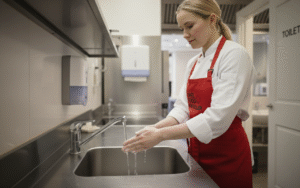
How to Wash Hands Properly: Step-by-Step
According to Health Canada and the World Health Organization (WHO), effective handwashing should take at least 20 seconds. Here’s how food handlers should do it:
-
Wet hands with clean, running warm water.
-
Apply soap and lather well.
-
Scrub hands thoroughly: palms, back of hands, between fingers, under fingernails, and thumbs.
-
Rinse well under running water.
-
Dry hands with a clean, disposable towel or air dryer.
-
Turn off the tap with the towel (to avoid recontamination).
Visual guide: World Health Organization – How to Handwash.
When Food Handlers Must Wash Their Hands
In Canadian foodservice operations, handwashing should happen at specific “critical moments,” including:
-
Before starting work or returning from a break
-
Before preparing or serving food
-
After handling raw meat, poultry, seafood, or eggs
-
After touching garbage, cleaning chemicals, or dirty dishes
-
After coughing, sneezing, or touching the face, hair, or body
-
After using the washroom
-
After handling money or mobile devices
-
Before and after putting on disposable gloves
Food safety inspections often check whether employees wash their hands at these key moments.
Common Mistakes to Avoid
Even when food handlers wash their hands, errors in technique can reduce effectiveness. Common mistakes include:
-
Not washing long enough (less than 20 seconds).
-
Skipping critical areas, like thumbs or under fingernails.
-
Recontaminating hands by touching the faucet or door handle afterward.
-
Using shared cloth towels, which can harbor bacteria.
-
Relying only on hand sanitizer instead of soap and water.
Correcting these mistakes requires ongoing training and supervision in food businesses.
The Role of Hand Sanitizers in Food Safety
Hand sanitizers are convenient, especially in settings where running water isn’t immediately available. However, they have limitations in food handling environments:
-
They do not remove visible dirt, grease, or food residues.
-
They are less effective against certain pathogens, like norovirus.
-
They cannot remove allergens (e.g., peanut proteins).
For food handlers in Canada, the best practice is:
-
Use soap and water whenever possible.
-
Use sanitizer (minimum 60% alcohol) only as a backup when sinks are unavailable.
-
Always wash hands with soap and water after using the restroom, regardless of sanitizer availability.
Hand Hygiene in Commercial Kitchens vs. At Home
In Food Businesses
-
Employers must provide designated handwashing stations with soap, warm running water, and disposable towels.
-
Stations must be accessible, stocked, and separate from dishwashing sinks.
-
Food safety supervisors should monitor compliance daily.
In Canadian Homes – canadian food safety training
-
Families should follow the same rules as restaurants.
-
Teach children to wash their hands before eating.
-
Keep kitchen sinks stocked with soap and clean towels.
-
Sanitize high-touch areas like faucets and fridge handles regularly.
👉 For consumer tips, check Health Canada – Safe Food Handling at Home.
Hand Hygiene and Allergens for Handwashing and Hand Sanitizing
In Canada, allergens are one of the top causes of food-related emergencies. Since hand sanitizers cannot remove allergen proteins, washing with soap and water is critical to prevent cross-contact.
For example:
-
A food handler touches a peanut product, then prepares a salad without washing.
-
Even trace amounts can trigger severe allergic reactions in customers.
Restaurants must implement strict allergen management policies, including mandatory handwashing after handling allergen-containing ingredients.
👉 Learn more from Food Allergy Canada.
Why Food Safe Training Is Key
Even with regulations and posted reminders, food handlers often underestimate the importance of hand hygiene. Formal food safety training reinforces:
-
Why handwashing is critical
-
When to wash and sanitize
-
The risks of neglecting hand hygiene
Training also ensures food handlers stay compliant with the Safe Food for Canadians Regulations (SFCR) and protect both their customers and their business. Handwashing and Hand Sanitizing: Essential Food Safety Practices in Canada.
Final Thoughts
Handwashing and hand sanitizing are the foundation of food safety in Canada. While sanitizers can be a helpful tool, nothing replaces the effectiveness of soap and water for removing harmful pathogens, allergens, and contaminants.
By following best practices, complying with Canadian regulations, and investing in ongoing food safety training, food handlers can dramatically reduce the risk of foodborne illness outbreaks and protect the health of millions of Canadians.
For more resources, visit: