

Food safety isn’t just a best practice — in Alberta, it’s the law. If you work in a food business (restaurants, food trucks, catering, farmers’ markets, etc.), or are thinking of starting one, you need to understand both the legal requirements and the everyday practices that keep food safe. SafeFoodHandler.ca is here to help. This article covers what the Alberta government requires, what you should do, and how to stay protected.
What Laws & Regulations Govern Food Safety in Alberta

Alberta has several laws, regulations, and codes that shape how food must be handled, stored, and sold. Key ones include:
-
Alberta Food Regulation under the Public Health Act. Food Safety+2CanLII+2
-
Food Retail and Food Services Code which sets standards for establishments serving or retailing food. Food Safety+1
-
Dishwashing Standards and related sanitation & hygiene regulations. Food Safety+1
-
Specific regulations for home-prepared low-risk foods. Alberta.ca+1
These laws define obligations for food businesses, food handlers, and vendors that sell food to the public.
Who Needs Food Handler Certification in Alberta
Certifications are not optional in many cases — Alberta law requires it. Here’s when and who:
-
Under Section 31 of the Alberta Food Regulation, food businesses must employ staff with Food Handler Certification. Food Safety+2CanLII+2
-
If there are five or fewer food handlers (including waitstaff) on the premises, one person with a valid Food Handler Certificate must have “care and control” of the establishment. That person doesn’t have to be present at all times. Food Safety+2CanLII+2
-
If there are six or more food handlers, then at least one person must hold a valid certificate and must be part of management or a supervisory role and be present in the premises. Food Safety+1
It’s also good practice (and often safer) for every person handling food in a business to complete certification, even if not legally required. blog.foodsafety.ca+1
Requirements for Permits, Licences & Inspections
Having the right certification is one piece. To operate legally, food businesses also need to:
-
Obtain a Food Handling Permit via Alberta Health Services (AHS) or the relevant regional health authority. Premises must meet the standards (equipment, cleanliness, layout). Food Safety+2foodsafetymarket.com+2
-
Undergo periodic inspections by Public Health Inspectors or Environmental Public Health Officers. Typically, new food businesses are inspected before opening, then at regular intervals (often every 4-6 months or more depending on risk). Food Safety+1
-
Ensure facilities, equipment, food storage, sanitation, transport, etc. are all in compliance with the food establishment regulations. For example, potentially hazardous foods must be stored below certain temps; equipment and surfaces must be sanitary. CanLII+1
Key Food Safety Practices in Alberta
Beyond legal mandates, there are everyday practices that protect health, assure customers, and keep businesses running smoothly. Some of these are required; many are best practice.
Temperature Control
-
Cold foods must be held at 4°C or below. CanLII+1
-
Hot foods must be kept at 60°C or above. CanLII
-
Frozen food must remain frozen during storage and display. CanLII
Hygiene & Sanitation
-
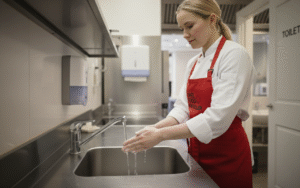
Staff must maintain high levels of personal hygiene: handwashing frequently, clean clothing, hair restraint, etc. CanLII+1
-
Surfaces, utensils, equipment in contact with food must be clean and sanitized. CanLII+1
-
Facilities must have hand‐washing stations and proper water supply. CanLII+1
Preventing Cross-Contamination
-
Separate raw from cooked foods (e.g. storage, preparation).
-
Use separate equipment (cutting boards, utensils) or properly sanitize between uses.
Labeling & Selling Low-Risk Foods
-
For low-risk home-prepared foods (like baked goods, some canned foods, whole produce, candies), there are specific rules under the Alberta Food Regulation. Alberta.ca+1
-
Labeling requirements must be met: identifying ingredients, producer, handling details. Alberta.ca
Training, Renewal & Language Access
-
Alberta Health Services offers “Food Safety Basics” online courses, home-study, printed materials, special event training, farmers’ market training, etc. Alberta Health Services+1
-
Some courses are offered in languages other than English (e.g. Arabic, Korean, Traditional Chinese, Vietnamese). Alberta Health Services
-
While certificates generally don’t expire, refresher training every ~5 years is strongly recommended and often required for management/supervisors. Food Handler+2blog.foodsafety.ca+2
What Happens If You Don’t Comply
Not following Alberta’s food safety laws can lead to serious consequences, such as:
-
Fines, penalties. Food Safety+1
-
Suspension or revocation of your permit to operate. Food Safety+1
-
Forced closure of the business in severe cases.
-
Damage to reputation, customer trust, and potential legal liability in case of foodborne illness.
Child-Care Facilities & Serving Food
Alberta has special considerations for licensed child-care settings:
-
There is recent review and upcoming changes (effective September 30, 2025) from the Food Safety and Licensed Facility-Based Child Care Review Panel that will further strengthen regulation in this area. Alberta.ca
-
Requirements include safe sourcing of food, storage at proper temperatures, training for staff, cleanliness, sanitation, and stronger oversight. Alberta.ca
How SafeFoodHandler.ca Supports Alberta Food Handlers
At SafeFoodHandler.ca, we align our courses and materials with Alberta’s laws and guidelines, so you get training that:
-
Meets the Alberta Food Regulation requirements, including Section 31 for food handler certification.
-
Is acceptable for obtaining or maintaining your Food Handling Permit and for satisfying inspector checks.
-
Covers the specifics: temperature control, addressing food hazards, sanitation, cross-contamination, and safe storage.
-
Offers flexible delivery: online modules, home-study, in-person options, and materials in multiple languages.
-
Includes refresher content and updates when laws or government guidance changes.
Top Takeaways & Practical Tips
To make sure you’re always compliant and doing food safety well:
-
Ensure at least one certified food handler according to your business size and staff numbers. If you have many staff who handle food, consider certifying all.
-
Keep proper records: temperature logs, cleaning schedules, inventory where required. They help during inspections and ensure consistency.
-
Train regularly: don’t treat training as a one-off. Refresher training (every 5 years or as required) helps keep everyone up to date.
-
Follow laws for low-risk home food production if you’re doing that. Know what qualifies, label properly, follow hygiene and safety rules.
-
Inspect your own operation: walk through your facility as if you were the inspector. Look for potential hazards: poor handwashing, dirty surfaces, unsafe food storage, improper transport.
-
Stay aware of changes: regulations and guidelines are updated. The child care food safety review, for example, indicates upcoming shifts.
Conclusion
In Alberta, food safety is enforced and expected. Certifying employees, following best practices, and keeping up with laws are essential — not just to avoid fines, but to protect customers and your business.
SafeFoodHandler.ca is your partner in this: we offer Alberta-compliant training, flexible formats, and content that reflects both legal requirements and real-world food handling practices.
If you’re in Alberta and want to get food handler certified (or update your training), visit SafeFoodHandler.ca to get started with courses that are accepted by Alberta Health Services and meet these standards.
If you like, I can also pull in real examples from Edmonton or Calgary health inspections, or even draft website-content (for your “Services” or “About Alberta Regulations” page) to help your SEO more locally. Want me to do that?