



Cross-Contamination in Canada: What Food Handlers Need to Know – Food safety is more than just cooking food at the right temperature—it also means preventing harmful bacteria, allergens, and other contaminants from spreading to meals before they reach the table. One of the leading causes of foodborne illness outbreaks Cross-Contamination in Canada, a preventable hazard that every food handler, restaurant worker, and home cook should understand.
Whether you’re running a food business or preparing meals for your family, recognizing how cross-contamination happens—and how to stop it—can protect Canadians from illness, costly recalls, and even serious health consequences.
In this comprehensive guide, we’ll explore:
-
What Cross-Contamination is and why it matters in Canada
-
The main types of cross-contamination (direct, indirect, and allergen-based)
-
How cross-contamination leads to foodborne illnesses
-
Canadian laws and regulations around food safety
-
Best practices for preventing cross-contamination in commercial kitchens and at home
-
Resources and training opportunities for Canadian food handlers
What Is Cross-Contamination in Canada?
Cross-contamination occurs when harmful bacteria, viruses, allergens, or chemicals are transferred from one surface, food, or object to another. This process makes food unsafe to eat—even if it looks and smells fine.
In Canada, the Public Health Agency of Canada (PHAC) reports that 1 in 8 Canadians (around 4 million people) experience a foodborne illness each year. Many of these cases are linked to pathogens like E. coli, Salmonella, Listeria, and Norovirus—all of which can spread through cross-contamination.
For example Cross-Contamination in Canada :
-
A cutting board used for raw chicken is not properly washed before slicing vegetables.
-
A food handler touches their hair or cellphone and then prepares a sandwich without washing their hands.
-
A spoon used to stir a peanut sauce is accidentally used again in a “nut-free” dish.
Each of these scenarios introduces contaminants to otherwise safe food.
For official statistics on foodborne illness in Canada, visit Government of Canada – Food-related Illnesses.
Types of Cross-Contamination
To prevent food safety risks, food handlers must recognize the main ways cross-contamination occurs:
1. Bacterial Cross-Contamination in Canada
The most common type. Harmful bacteria transfer from raw foods, surfaces, or hands to ready-to-eat foods.
-
Example: Raw poultry juices dripping onto a salad in the refrigerator.
2. Allergen Cross-Contamination
Occurs when traces of allergens (e.g., peanuts, shellfish, milk, gluten) come into contact with foods meant to be allergen-free.
-
Example: Using the same spatula for a gluten pizza and a gluten-free pizza.
This type can be life-threatening for Canadians with severe allergies. According to Food Allergy Canada, more than 3 million Canadians self-report having a food allergy.
3. Chemical Cross-Contamination
Happens when cleaning agents, pesticides, or other chemicals come into contact with food.
-
Example: Spraying sanitizer near uncovered ingredients.
4. Physical Cross-Contamination
Foreign objects accidentally introduced into food, such as hair, jewelry, or packaging materials.
How Cross-Contamination in Canada Causes Foodborne Illness in Canada
Cross-contamination is one of the fastest ways foodborne pathogens spread. Some common culprits include:
-
Salmonella – Found in raw poultry, eggs, and produce. Causes diarrhea, fever, and cramps.
-
E. coli O157:H7 – Associated with undercooked beef and contaminated produce. Can lead to severe kidney damage.
-
Listeria monocytogenes – Found in deli meats, unpasteurized dairy, and ready-to-eat foods. Particularly dangerous for pregnant women and seniors.
Foodborne illness outbreaks not only affect public health but also carry major economic consequences. According to a Canadian Food Inspection Agency (CFIA) report, recalls due to cross-contamination can cost companies millions in lost revenue, fines, and reputational damage.
Canadian Food Safety Regulations on Cross-Contamination
Canada has strict regulations designed to protect consumers:
-
Safe Food for Canadians Regulations (SFCR) – Businesses must have preventive controls in place, including cross-contamination procedures.
-
Canadian Food Inspection Agency (CFIA) – Conducts inspections and enforces rules for food establishments.
-
Health Canada – Sets policies and standards for food safety.
Food businesses are required to implement a Food Safety Plan based on Hazard Analysis Critical Control Points (HACCP), which identifies where cross-contamination risks may occur and how to control them.
For more on Canadian food safety laws, visit CFIA Food Safety.
Preventing Cross-Contamination in Canada: What Food Handlers Need to Know
Commercial kitchens and food service establishments must take proactive steps to eliminate cross-contamination risks. Best practices include:
1. Proper Hand Hygiene
-
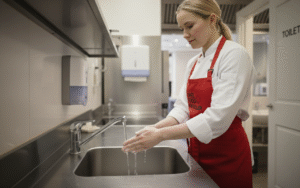
Wash hands with warm water and soap for at least 20 seconds. Cross-Contamination in Canada
-
Train staff to wash hands after handling raw foods, garbage, or personal items.
2. Color-Coded Equipment
-
Use separate cutting boards, knives, and utensils for raw meats, seafood, produce, and ready-to-eat foods.
-
Example system: Red (raw meat), Blue (fish), Green (vegetables), Yellow (poultry).
3. Food Storage Procedures
-
Store raw meats below ready-to-eat foods in refrigerators.
-
Keep allergens in clearly labeled, separate containers.
4. Cleaning and Sanitizing
-
Clean and sanitize all food contact surfaces before and after use.
-
Follow manufacturer instructions for sanitizers approved by Health Canada.
5. Allergen Management
-
Maintain strict separation of allergen and non-allergen foods.
-
Train staff to recognize allergens and respond to emergencies.
6. Staff Training
-
Continuous training ensures employees understand risks and follow safe food handling practices.
Preventing Cross-Contamination at Home
Cross-contamination prevention isn’t just for restaurants—it’s equally important in Canadian households. Home cooks can follow these tips:
-
Separate raw and cooked foods: Always use different plates and utensils.
-
Wash produce under running water before eating.
-
Avoid kitchen clutter: Keep personal items like phones, bags, or pets away from food prep areas.
-
Use a food thermometer: Cooking food to the right temperature kills bacteria, but preventing contamination beforehand is just as important.
-
Clean kitchen sponges and cloths frequently or replace them often.
For more at-home food safety tips, check out Health Canada – Safe Food Handling.
Cross-Contamination and Allergens in Canada
Food allergies are a serious public health issue in Canada. The federal government requires food manufacturers to declare priority allergens, gluten sources, and sulphites on labels. But Cross-Contamination in Canada during preparation still poses risks.
In restaurants, food handlers must be extra careful to:
-
Use dedicated prep areas and utensils for allergen-free meals.
-
Wash hands and change gloves between tasks.
-
Clearly label “allergen-free” orders to avoid mix-ups.
Failure to prevent allergen cross-contamination can result in life-threatening anaphylaxis. Food businesses that don’t follow best practices can also face lawsuits and loss of consumer trust.
Why Training Matters
Preventing cross-contamination requires knowledge, awareness, and practice. Food safety training ensures employees understand:
-
The science behind cross-contamination
-
Their responsibilities under Canadian law
-
How to properly clean, store, and handle food
-
The importance of allergen control
Online training platforms (like SafeFoodHandler.ca) make it easier for food handlers across Canada to get certified and stay compliant with national standards.
Final Thoughts
Cross-contamination is one of the leading causes of foodborne illness in Canada, but it’s also one of the most preventable. Whether you’re a restaurant owner, a chef, or a home cook, following proper hygiene and food handling practices is critical.
By understanding the risks, staying compliant with Canadian food safety regulations, and investing in proper training, Canadians can reduce foodborne illness cases, protect vulnerable populations, and build consumer trust in the food industry.
For more resources, visit: