


Canadian Safe Food Inspections
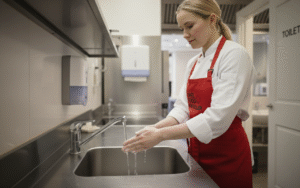
Canadian Safe Food Inspections regime is a shared responsibility. Federally, the Canadian Food Inspection Agency (CFIA) leads the charge, enforcing standards set by Health Canada under key legislation like the Safe Food for Canadians Act (SFCA) and the Food and Drugs Act. The CFIA’s mandate covers everything from import/export compliance to domestic processing, ensuring food is safe, accurately labeled, and free from hazards like pathogens or chemical residues. Provincially, health authorities and local public health units handle day-to-day enforcement, particularly for intra-provincial activities. For instance, Ontario’s Health Protection and Promotion Act requires at least one certified food handler on duty during operating hours, while British Columbia mandates FOODSAFE Level 1 certification for food-contact workers. Across the 10 provinces and three territories, requirements vary—four regions (e.g., BC, Ontario, Manitoba, Nova Scotia) demand certification for all or most handlers, seven focus on managers, and two (Quebec, Nunavut) emphasize training without formal mandates. This patchwork ensures tailored oversight but underscores the need for certified handlers everywhere to prevent lapses. Inspections are the mechanism that ties it all together. They verify compliance with preventive controls, traceability, and hygiene standards, preventing issues like the physical contaminants (e.g., glass or hair) that can turn a meal into a health hazard.
How Inspection Visits Unfold: A Risk-Based Approach
CFIA inspections aren’t random; they’re strategic and science-driven. In 2025, the agency conducts thousands of targeted visits annually, focusing on high-risk sectors like meat processing, dairy, and imports. Here’s a breakdown of the process:
- Pre-Inspection Preparation: Businesses must maintain preventive control plans (PCPs) under the Safe Food for Canadians Regulations (SFCR), outlining hazard identification, monitoring, and corrective actions. Inspectors review these remotely or on-site, often using digital tools for efficiency.
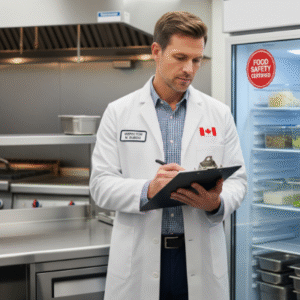
- On-Site Visits: Inspectors arrive unannounced in routine cases or scheduled for follow-ups. They examine facilities for sanitation, temperature controls (e.g., fridges at 4°C or below), pest management, and employee hygiene. In high-risk operations, like slaughterhouses, ante- and post-mortem checks are mandatory. For imports, the Canada Border Services Agency (CBSA) flags shipments for CFIA review at ports.
- Sampling and Testing: No visit is complete without samples. CFIA labs analyze for microbes (e.g., Salmonella, E. coli), chemicals, and residues. In 2024-2025, advanced whole genome sequencing has revolutionized this, linking outbreaks faster—reducing response times by days compared to traditional methods.
- Canadian Safe Food Inspections Compliance Verification: Inspectors check certifications, labels, and records. In Alberta, for example, businesses with over five handlers must have a certified supervisor on duty. Non-compliance triggers immediate actions: warnings, prohibitions on sales, or facility closures.
- Post-Inspection Actions: Reports are public in many provinces (e.g., via Alberta Health Services websites). Follow-ups ensure fixes, with 79.5% of establishments resolving issues in 2023-2024. Severe violations lead to fines up to $120,000 or prosecutions.
This risk-based model—prioritizing vulnerable points like supply chains—ensures efficiency. As one CFIA official noted in a recent summit, “Inspections aren’t just checks; they’re partnerships to build safer systems.”
Recent Developments and Challenges in 2025
Canadian Safe Food Inspections 2025 has brought both progress and hurdles. The CFIA’s Feeds Regulations, 2024—fully effective by December—modernize animal feed standards, aligning with international best practices to prevent contamination upstream. Meanwhile, the 20th Annual Canadian Summit on Food Safety highlighted innovations like AI-driven traceability and UV-C disinfection to enhance inspections.Yet, challenges persist. A Salmonella outbreak linked to pistachios prompted recalls of multiple products in September, sickening dozens. Earlier, a fatal listeriosis incident tied to plant-based milks exposed gaps in non-dairy processing, with 20 illnesses and three deaths reported by mid-2024. In Alberta, an E. coli outbreak at Calgary daycares (448 cases in 2023) led to a government panel’s final report in July 2025, recommending stricter shared-kitchen oversight and public posting of inspection results.Provincial variations add complexity. Saskatchewan’s 2025 updates mandate certification for all prep workers, while Quebec focuses on hygiene training. Amid these, food waste remains a concern—Canada discards 58% of produced food yearly, often due to poor handling that inspections aim to curb.
The Human Element: Certified Handlers and Consumer Tips
Canadian Safe Food Inspections – Inspections succeed when backed by trained staff. Food handler certification—required in most provinces—equips workers with knowledge on cross-contamination, allergens, and temps. Providers like SafeCheck and CIFS offer online courses (e.g., 6-hour modules for $25), recognized nationwide, with 98% pass rates.For consumers, vigilance matters. Check recalls on the CFIA site, wash produce, and report concerns via the hotline (1-800-442-2342). As World Food Safety Day 2025’s theme—”Prepare for the Unexpected”—reminds us, readiness starts at home with Canadian Safe Food Inspections.
Looking Ahead: A Safer, Smarter System
Canadian Safe Food Inspections framework, blending federal rigor with provincial flexibility.