

How to Keep Your Kitchen Safe and Prevent Foodborne Illness
Canada Food Safety Guidelines is a top priority in Canada. Every year, foodborne illness affects thousands of Canadians due to improper handling, storage, or preparation of food. Following Canada’s food safety guidelines not only protects your health but also ensures that meals served at home or in restaurants are safe and enjoyable.
In this article, we’ll explore Canadian food safety standards, the most common foodborne risks, and practical steps you can take to keep your kitchen safe.
Canada Food Safety Guidelines
Why Food Safety Matters in Canada
According to the Government of Canada, an estimated 4 million Canadians experience foodborne illness each year. These illnesses can be caused by harmful bacteria such as Salmonella, E. coli, and Listeria.
The good news? Most foodborne illnesses are preventable with proper food handling, cooking, and storage practices.
Key Canadian Food Safety Guidelines
Here are the four essential food safety principles recommended by the Canadian Food Inspection Agency (CFIA):
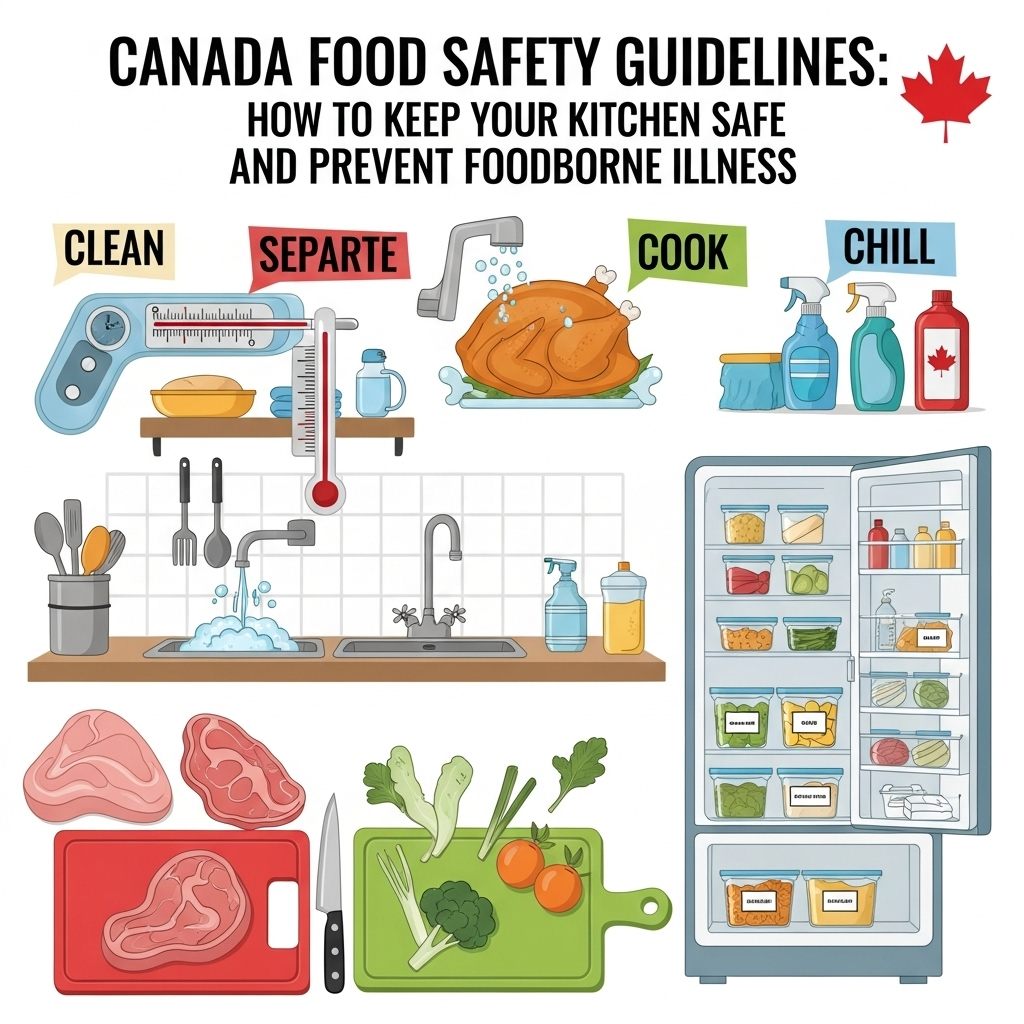
1. Clean: Wash Hands and Surfaces
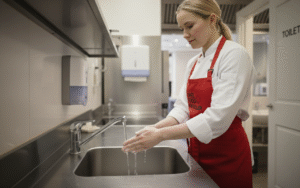
- Always wash your hands with warm water and soap for at least 20 seconds before and after handling food.
- Disinfect cutting boards, counters, and utensils after preparing raw meat, poultry, or seafood.
2. Separate: Avoid Cross-Contamination and follow Canada Food Safety Guidelines: How to Keep Your Kitchen Safe and Prevent Foodborne Illness
- Keep raw meat, poultry, and seafood away from ready-to-eat foods.
- Use separate cutting boards for raw proteins and vegetables.
3. Cook: Use the Right Temperatures
- Cook food to safe internal temperatures (e.g., poultry at 74°C / 165°F).
- Use a digital food thermometer to check doneness instead of guessing.
4. Chill: Store Food Safely
- Refrigerate leftovers within two hours.
- Keep your fridge at or below 4°C (40°F) and your freezer at -18°C (0°F).
Common Foodborne Risks in Canada
Some of the most frequent causes of food poisoning in Canada include:
- Salmonella – often found in undercooked chicken and eggs.
- E. coli – linked to contaminated beef and unwashed produce.
- Listeria – a risk in deli meats, soft cheeses, and unpasteurized dairy products.
Knowing these risks helps Canadians make smarter choices when shopping, cooking, and dining out.
Tips for Safe Food Handling at Home
- Always check “best before” dates on packaged foods.
- Wash fresh fruits and vegetables under running water before eating.
- When thawing meat, do so in the fridge, not on the counter.
- If in doubt, throw it out – never take chances with spoiled food.
Final Thoughts about Canada Food Safety Guidelines
Following Canada’s food safety guidelines and Canada Food Safety Guidelines: How to Keep Your Kitchen Safe and Prevent Foodborne Illness is the best way to protect yourself and your family from foodborne illness. Whether you’re a home cook or a food business owner, practicing safe food handling, storage, and cooking techniques is essential.
By keeping your kitchen clean, avoiding cross-contamination, and paying attention to cooking and storage temperatures, you can confidently prepare meals that are both safe and delicious.
Food Safety at Home: Practical Tips
Keeping food safe in your own kitchen doesn’t have to be complicated. Here are some easy-to-follow tips:
-
Check “best before” dates when shopping and consuming food.
-
Organize your fridge so that raw foods never touch ready-to-eat items.
-
Avoid the danger zone (4°C–60°C / 40°F–140°F), where bacteria multiply rapidly.
-
Marinate foods in the refrigerator, not on the counter.
-
When in doubt, throw it out—if something smells off, don’t take risks.
For more safe food handling strategies, visit Safe Food Handler, a resource designed to help Canadians develop safe kitchen habits and prevent foodborne illness.
Food Safety in Restaurants and Food Businesses
In Canada, food businesses must follow strict regulations to ensure consumer safety. Provincial and municipal health authorities conduct regular inspections of restaurants, catering services, and food trucks.
Some key practices for businesses include:
-
Training staff in safe food handling certifications.
-
Keeping detailed records of food temperatures and cleaning schedules.
-
Following recall procedures when notified by the CFIA.
Business owners who ignore these responsibilities risk fines, closures, and damage to their reputation.
Government of Canada’s Role in Food Safety
The Canadian Food Inspection Agency (CFIA) is the primary authority responsible for enforcing food safety laws. It works alongside Health Canada to establish policies and respond to outbreaks.
CFIA’s role includes:
-
Monitoring and investigating food recalls.
-
Conducting inspections of food imports, exports, and production facilities.
-
Educating the public about safe food practices.
By relying on these organizations, Canadians can trust that their food supply chain is monitored and held to high standards.
The Future of Food Safety in Canada
With globalization, climate change, and new food trends, food safety continues to evolve in Canada. For example:
-
Online food delivery apps require extra attention to ensure meals stay at safe temperatures during transit.
-
Plant-based alternatives must be handled with the same caution as traditional meat and dairy.
-
New technologies, such as blockchain and AI, are being developed to track food safety from farm to fork.
As risks evolve, the importance of following safe food handling guidelines remains constant.