
(SafeFoodHandler.ca — your partner in food safety training and certification)
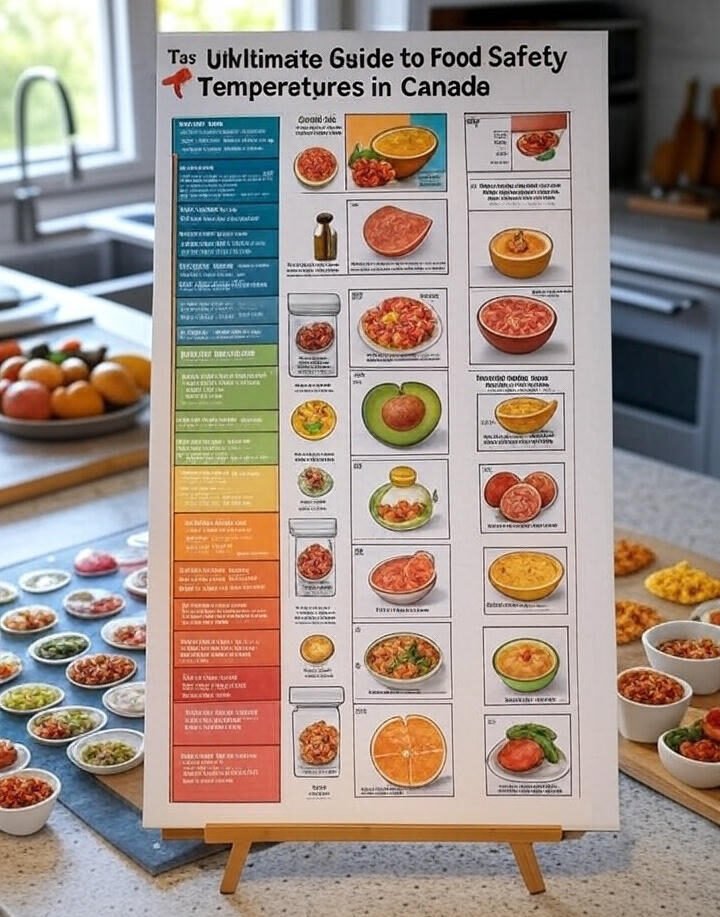
The Ultimate Guide to Food Safety Temperatures in Canada – When it comes to food safety, there’s one detail that consistently makes or breaks the effort to keep meals safe: temperature control. It doesn’t matter whether you’re a home cook preparing Sunday dinner for your family, a restaurant owner managing a bustling kitchen in Alberta, or a caterer serving at a wedding — the principle is the same: keep food at safe temperatures and you protect everyone you serve from the risk of foodborne illness.
This guide, created by SafeFoodHandler.ca, explores everything you need to know about safe cooking, cooling, storing, and reheating temperatures. Along the way, you’ll learn why temperature control is central to food safety, discover the official Canadian guidelines, and get practical tips you can apply immediately in your kitchen or food business.
🔥 Why Temperature Is the Cornerstone of Food Safety
The Ultimate Guide to Food Safety Temperatures in Canada guided by science and public health. Health Canada and the Canadian Food Inspection Agency (CFIA) emphasize that most foodborne illnesses can be prevented by controlling temperature. Here’s why it matters:
-
Bacteria grow fastest in certain conditions. Dangerous microorganisms like E. coli, Salmonella, and Listeria thrive between 4 °C (40 °F) and 60 °C (140 °F) — the range known as the “danger zone.” Keeping food above or below this range is your strongest defense.
-
Not everything “looks” spoiled. Food can appear fresh, smell fine, and even taste normal while still harboring harmful pathogens. Only correct temperature control ensures safety.
-
Cooking is more than flavor. While most of us think of cooking as a way to make food taste better, it also plays the role of sanitation. Heating food to the proper internal temperature kills harmful bacteria and viruses.
-
Food businesses have legal obligations. In Alberta, British Columbia, and across Canada, food establishments are required by law to train food handlers on temperature safety. Violating standards not only risks customer health but can also lead to fines, closures, or lawsuits.
📊 The Canadian Food Safety Temperature Chart
Here is a breakdown of recommended safe internal cooking temperatures, based on Canadian guidelines. These are the minimum internal temperatures food must reach before being safely served:
| Food Category | Minimum Safe Internal Temp* | Notes |
|---|---|---|
| Ground Meats (Beef, Veal, Pork, Lamb) | 71 °C (160 °F) | Bacteria spread throughout ground meat, so thorough cooking is essential. |
| Whole Cuts (Steaks, Roasts, Chops – Beef, Veal, Lamb) | 63 °C (145 °F) | Allow a 3-minute rest time before carving or serving. |
| Pork (chops, roasts, ribs) | 71 °C (160 °F) | Pink colour is not a reliable indicator — always check with a thermometer. |
| Poultry (chicken, turkey, duck, goose) | 74 °C (165 °F) for pieces 82 °C (180 °F) for whole bird |
Check thickest part (e.g., thigh joint). |
| Egg Dishes (quiche, casseroles, frittatas) | 74 °C (165 °F) | Raw or undercooked eggs should be avoided unless pasteurized. |
| Seafood (fish, shellfish, crustaceans) | 70 °C (158 °F) for fish 74 °C (165 °F) for shellfish |
Cook fish until flesh is opaque and flakes easily. |
| Hot Dogs / Processed Meats | 74 °C (165 °F) | Especially important when reheating or cooking for children/pregnant individuals. |
*Use a calibrated food thermometer to measure at the thickest point.
⚠️ The Danger Zone Explained
The “danger zone” between 4 °C and 60 °C is the range where bacteria multiply rapidly, sometimes doubling every 20 minutes. A piece of chicken left on the counter for two hours may look the same, but it can easily contain millions of bacteria by the time it’s served.
Rules to Avoid the Danger Zone:
-
Keep cold food cold: Refrigerators should be set to ≤ 4 °C (40 °F). Freezers should be ≤ -18 °C (0 °F).
-
Keep hot food hot: Once cooked, keep dishes at ≥ 60 °C (140 °F) if not served immediately.
-
Limit room temperature exposure: Perishable foods should not sit in the danger zone longer than 2 hours (or 1 hour if the room is very warm).
This rule is particularly important for buffets, catered events, picnics, and lunch boxes — all places where food can sit out longer than intended.
🧰 Practical Tips for Safe Cooking Temperatures
Knowing the numbers is only part of the job. Applying them consistently in a busy kitchen takes planning. Here are strategies that work in restaurants, food trucks, and homes:
-
Use a digital thermometer. Old “guesswork” methods like cutting into chicken to check the juices are not reliable. Invest in a good thermometer.
-
Calibrate regularly. A thermometer that’s a few degrees off can mean the difference between safe and unsafe food. Test in ice water (should read 0 °C) and boiling water (100 °C).
-
Check the thickest spot. Always measure at the centre of the thickest piece of meat, away from bone or fat.
-
Account for carryover cooking. Large cuts (like roasts) continue to cook after being removed from heat. Let meat rest and check again.
-
Train your team. If you operate a food business, make temperature checks part of staff routines. Assign responsibility and provide log sheets.
❄️ Cold Storage Temperatures: Don’t Forget Refrigeration
Safe food handling isn’t just about cooking — it’s also about storing food properly. Refrigeration slows down bacterial growth, while freezing stops it altogether.
-
Refrigerators: 0–4 °C (32–40 °F)
-
Freezers: –18 °C (0 °F) or lower
-
Cold holding for service: Keep prepared cold foods (salads, deli meats, sushi, etc.) at ≤ 4 °C until served.
Tips for Cold Storage Safety:
-
Avoid overcrowding your fridge. Air circulation is necessary for consistent temperatures.
-
Use FIFO (First In, First Out) rotation: older items get used first.
-
Label and date everything — especially in restaurants.
-
Never thaw food at room temperature. Instead, thaw in the fridge, under cold running water, or in the microwave if cooking immediately.
🔄 Cooling and Reheating: The Forgotten Steps
Many foodborne illness outbreaks are caused not by undercooking but by improper cooling and reheating.
-
Cooling Rule: Bring hot food down from 60 °C to 20 °C within 2 hours, then from 20 °C to 4 °C within 4 hours. Use shallow pans, ice baths, or blast chillers.
-
Reheating Rule: Always reheat leftovers to at least 74 °C (165 °F) before serving. Never reheat more than once.
🧑🍳 Real-World Scenarios – The Ultimate Guide to Food Safety Temperatures in Canada
To put these guidelines into perspective, here are a few examples of how safe temperature practices prevent illness:
-
Alberta catering company: After complaints of food poisoning, inspectors found chicken was held at 45 °C in warmers. This kept it in the danger zone for hours. Had it been kept at 60 °C, illness could have been avoided.
-
Home kitchen: A family in BC thawed turkey on the counter overnight. The surface reached the danger zone long before cooking, allowing bacteria to multiply. Safe thawing in the fridge would have prevented the risk.
-
Restaurant chain: Staff failed to calibrate thermometers, consistently undercooking ground beef burgers by 5 °C. Proper training and calibration solved the issue before it became a public health problem.
🏆 Why Training Matters
Understanding food safety temperatures is one thing; consistently applying them in a real kitchen is another. That’s why Canada requires food handler certification for many workers in the food industry.
At SafeFoodHandler.ca, our online training programs help Albertans (and Canadians nationwide) learn not just the numbers, but the why behind them. Our certification covers:
-
Foodborne illness prevention
-
Safe food storage and handling
-
Cleaning and sanitation
-
Cross-contamination prevention
-
Temperature control for cooking, storage, cooling, and reheating
By completing our course, you gain the confidence and credentials to protect your customers, your family, and your career.
✅ Quick Temperature Safety Checklist
Here’s a summary you can keep posted in your kitchen:
-
✅ Refrigerate food promptly (≤ 4 °C).
-
✅ Cook meats, poultry, seafood, and eggs to safe internal temperatures.
-
✅ Keep hot foods at ≥ 60 °C during holding or serving.
-
✅ Avoid keeping food in the danger zone for more than 2 hours.
-
✅ Cool foods rapidly and reheat properly.
-
✅ Train and certify all food handlers.
Final Thoughts
Safe food is about more than taste — it’s about protecting health. Whether you’re a restaurant manager in Alberta, a food truck operator in BC, or simply a parent packing school lunches, temperature control is your best defense against foodborne illness.
By following the Canadian guidelines and adopting daily habits of thermometer use, safe storage, and proper reheating, you not only keep food delicious but also keep your customers and loved ones safe.
At SafeFoodHandler.ca, we provide the training and certification to make these best practices second nature. When food handlers know their numbers — and stick to them — everyone benefits.
Stay safe. Stay certified. Stay confident.
-
For more info, resources, visit: