
Food safety isn’t just a regulatory checkbox — it’s the foundation of public health, trust in the foodservice industry, and your success as someone handling, preparing, or serving food. On this page, we’ll explore Canada’s national food safety guidelines, what steps you need to take, and how SafeFoodHandler.ca can help you stay compliant, confident, and safe.
Understanding Food Safety in Canada According to the Canadian Government?

Canada’s federal approach to food safety involves multiple layers: regulations, education, guidelines, and monitoring. The Health Canada site provides centralized information to help citizens, food handlers, and businesses understand how to reduce foodborne illness. Topics include:
-
Safe cooking temperatures
-
Handling food for vulnerable populations (children, seniors, immunocompromised, pregnant people)
-
Best practices for storing and preparing food
-
Seasonal and emergency-focused advice
- Understanding Food Safety in Canada
-
Guidelines for meats, seafood, fruits & vegetables, and infant formulas Government of Canada
These government resources form the backbone of safe food handling standards across provinces and territories and can serve as your benchmark for developing or refreshing your own training and procedures.
Why Food Safety Matters — The Stakes for Everyone
The consequences of poor food safety aren’t just theoretical:
-
Health risks: Foodborne illnesses can lead to hospitalization, long-term health complications, or worse — especially in vulnerable populations.
-
Legal compliance: Laws and regulations in Canada require adherence to certain food safety practices. Failing inspections or violating health codes can lead to fines or shutdowns.
-
Reputational damage: News of food poisoning or unsafe practices spreads fast. Trust once lost is hard to regain.
-
Cost implications: Wastage, recalls, lawsuits, and spoilage all eat into margins. Investing in proper training and systems prevents loss.
SafeFoodHandler.ca aims to reduce these risks by helping workers and businesses meet or exceed the standards laid out by Health Canada and regional health authorities.
Key Areas of Food Safety Guidance in Canada
Here are the major topics that Health Canada highlights, and which should be integral parts of your food safety training and protocols:
| Topic | What It Covers | Why It’s Important |
|---|---|---|
| Safe Cooking & Internal Temperatures | Ensuring meats, poultry, seafood, eggs are cooked to temperatures that kill harmful pathogens. Use of precise tools like digital thermometers. | Undercooked food is a major cause of foodborne illness. Proper cooking destroys bacteria like Salmonella, E. coli, etc. Government of Canada |
| Food Safety for Vulnerable Populations | Guidelines for protecting groups like infants, elderly, pregnant people, immunocompromised individuals. | These groups face greater harm from exposure to contaminants. Precautions are more strict. Government of Canada |
| General Handling, Storing, & Preparing Food | Safe practices for food storage (temperature control, separation), prevention of cross-contamination, hygiene (hands, surfaces), safe thawing, etc. | Many food poisoning outbreaks stem from poor handling or storage. |
| Fruits, Vegetables, & Produce Safety | Washing produce, avoiding contaminants, safe handling of unpasteurized juices/ciders. | Produce is often consumed raw, offering little margin for error. |
| Disasters, Seasonal & Emergency Advice | Guidance for maintaining food safety during power outages, floods, heat waves, holidays, etc. | Emergencies can disrupt power, storage temperature, supply chains — increasing risk. |
| Infant Formula & Unpasteurized Milk | Safe preparation, storage, and concerns associated with raw milk. | Infants have fragile immune systems; raw milk poses known risks without any pasteurization. |
What Canada Requires From Food Handlers & Food Businesses
Depending on your province or territory, different food safety training or certification requirements may exist. But generally:
-
Basic food handler training is expected: safe food prep, hygiene, storage.
-
Use of accurate tools: thermometers, calibrated equipment.
-
Adherence to regulations: local bylaws, provincial health authority rules, Canada’s Food and Drugs Act, Safe Food for Canadians Act.
-
Record keeping: temperature logs, cleaning schedules, traceability where required.
-
Regular education/awareness: staying updated with changes in guidelines (e.g., new risks, seasonal or emergency advisories).
SafeFoodHandler.ca helps you check off all of these boxes by aligning its training with Canadian standards and offering tools and content that map to what Health Canada expects.
Best Practices for Understanding Food Safety in Canada — Tips & Checks
To ensure your day-to-day operations are safe, here are practical steps to apply:
-
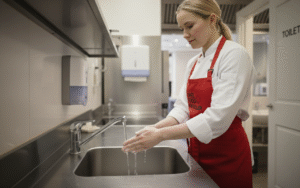
Always wash hands with soap and warm water BEFORE handling food, after touching raw meat/seafood, and after using the restroom.
-
Use separate cutting boards/tools for raw meat vs produce. Clean and sanitize them between uses.
-
Maintain refrigerator and freezer temps: keep cold foods cold (below 4 °C / 40 °F), minimize time in the “danger zone” (4-60 °C).
-
Cook foods to safe internal temperatures (check local guidelines for exact temps for chicken, pork, fish, etc.).
-
Use pasteurized milk, produce, juices. Avoid raw milk, unless in jurisdictions where it’s legally allowed and you understand all risks.
-
Store foods properly: wrap, cover, label with date. Follow “first in, first out” (FIFO) in storage.
-
Be especially vigilant with vulnerable customers: pregnant individuals, children, seniors, immunocompromised. Minor lapses have magnified consequences.
-
Monitor for food safety alerts from Health Canada: recalls, outbreaks, seasonal advisories.
SafeFoodHandler.ca & How We Fit with Canada’s Guidelines
SafeFoodHandler.ca specializes in making food safety training accessible, comprehensive, and compliant with Canadian standards. Here’s how:
-
Curriculum based on Health Canada’s topics: all the major domains (safe cooking, vulnerable populations, produce, etc.) are included.
-
Online, flexible learning: complete training on your schedule — ideal for busy workplaces or remote learners.
-
Practical assessments: quizzes, scenario-based learning, and final exam to ensure comprehension.
-
Certification that matches provincial/territorial requirements: recognized by employers and health authorities.
-
Updates when guidelines change: we monitor changes from Health Canada and adjust the content.
Emergency & Seasonal Food Safety
Food safety isn’t static. Different seasons or emergencies bring unique challenges:
-
Power outages or natural disasters: refrigeration fails, water might be compromised. Know when to discard food, how to keep perishables safe.
-
Summer heat: faster bacterial growth; more care with outdoor events, picnics, BBQs.
-
Holiday seasons: large volume cooking, more batch prep, more guests — higher risk.
-
Emerging threats: e.g., influenza or other pathogens; changes in regulation or advisories from Health Canada.
SafeFoodHandler.ca gives you modules or advice that address these specific situations so you can adapt quickly and safely.
How You Can Stay Up to Date & Compliant
To maintain good food safety practices over time:
-
Periodically review Health Canada’s food safety pages for any alerts or new guidelines.
-
Refresh your training every few years (or when regulations change).
-
Use digital thermometers and maintain your equipment properly.
-
Document procedures: cleaning logs, temperature records, delivery checks.
-
Audit your own practices: walk through your kitchen or facility and use a checklist based on Canada’s topics.
Bottom Line
Understanding Food Safety in Canada is a shared responsibility — regulators, food service businesses, supply chains, and individual food handlers all play a part. The government’s pages give a reliable, up-to-date framework for what you need to do; SafeFoodHandler.ca is here to help you implement it.
By aligning your practices with Health Canada’s guidance — on cooking temperatures, vulnerable populations, produce, emergency handling, and more — you protect your customers, your reputation, and your bottom line.
For more infos, resources, visit: